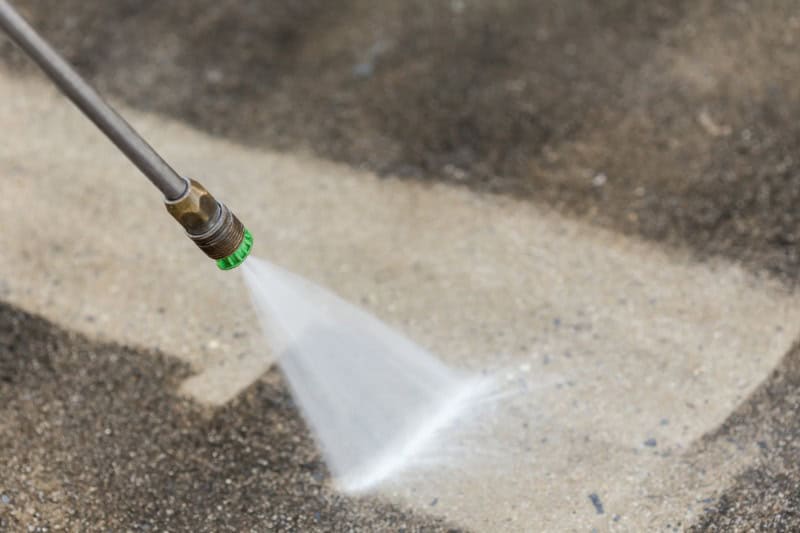
1. Pressure Washing for Deep Cleaning
Pressure washing is one of the most effective ways to clean concrete surfaces. The powerful stream of water removes dirt, grime, algae, and even old stains that ordinary scrubbing can’t reach. Professional pressure washing services use commercial-grade equipment that provides the right amount of pressure for each surface type. Too much pressure can damage the surface, while too little won’t clean effectively. Professionals also know when to use hot water or surface cleaners to achieve the best results.
2. Using Concrete Cleaners and Degreasers
For oil stains and automotive fluids, pressure washing alone may not be enough. Concrete cleaners and degreasers are designed to break down stubborn spots before washing. These solutions penetrate the pores of the concrete to lift out oil and grease, making it easier to rinse away. When using cleaners, it’s important to follow product instructions carefully and allow enough dwell time for the solution to work before rinsing.
3. Pre-Treating Mold and Mildew
In shaded or damp areas, mold and mildew are common problems on concrete surfaces. Before pressure washing, applying a mild detergent or a specialized cleaner helps kill organic growth at the root. Professionals often use environmentally friendly solutions that eliminate mold and algae without harming nearby plants or landscaping. Regular cleanings help prevent regrowth and keep your concrete looking fresh longer.
4. Surface Scrubbing for Smaller Areas
For small patios, steps, or garage floors, a stiff brush and concrete cleaner can work well. Manual scrubbing may take more effort, but it allows you to target specific spots without overspray. Using hot water can also boost cleaning power. However, for larger areas or heavily stained surfaces, pressure washing is usually more efficient and thorough.
5. Sealing for Long-Term Protection
After cleaning, applying a concrete sealer is a smart step to help maintain your results. Sealers protect against stains, moisture, and surface wear, making it easier to keep your concrete clean in the future. A good sealer can also enhance the concrete’s appearance and extend its lifespan.
Keeping concrete clean isn’t just about looks—it also helps preserve the material and prevent cracking or deterioration. Whether you’re maintaining a residential driveway or a commercial walkway, using the right cleaning methods makes a noticeable difference. For the safest and most effective results, consider hiring a professional pressure washing service that specializes in concrete cleaning.